What comes to mind when you think of Thailand? The beaches? The night life? Pattaya? It was the same for me up until recently. But this blog here is not about any of them. It is about the majestic temples of Thailand.
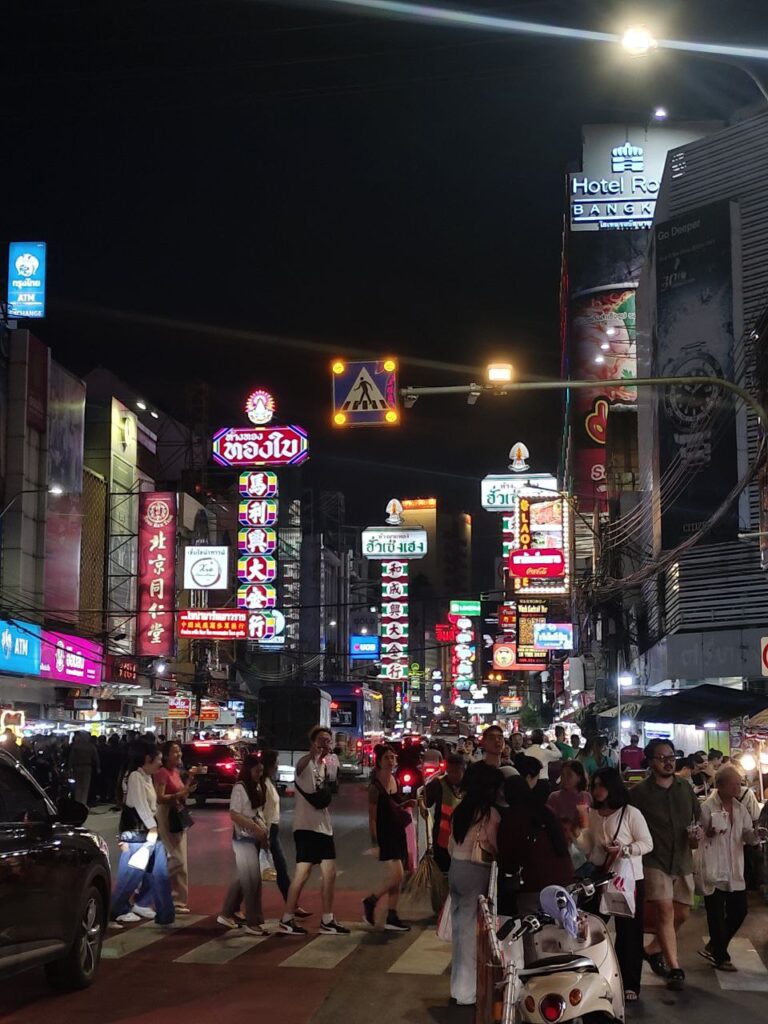
As a history enthusiast, Angkor Wat was always on my bucket list. After a long wait, last June, Me and my friend Sidharth decided to explore the architecture of Cambodia. We have 8 days in hand. The initial three days were planned to be spent in Angkor Wat and the remaining days in Thailand. We landed in the capital city of Bangkok on June 6th 2025. What a stunning city…!!!. A city which doesn’t sleep. I had never expected Bangkok to be an organized, well mannered, structured and mankind city.There we were on the banks of river Chao Phraya, a city which never sleeps.
The unexpected setback
After exploring the 19th century Wat Arun Ratchawararam temple in Bangkok, we decided to travel to Cambodia. We already booked the bus, accommodation,etc in the city of Siem Riep, where Angkor Wat is located. We decided to travel through land to experience the countryside of Thailand. After crossing the towns and villages, we reached the border of Thailand: the Poipet land border. But unfortunately, due to some unforeseen circumstances, we were unable to cross the border. Disappointed, disheartened and with no clue on what to do for the next 3 days. After much thought and consideration, we were thrilled to have found a hidden gem of a place, unexplored by tourists, the place of ‘’Ayyuthaya’’.
Journey to Ayyuthaya
We reached Bangkok late at night and lodged into a small lodge near prime night street. Then after sleeping late, we woke up early to reach the station on time. A well designed cute colonial mixed contemporary styled building. I couldn’t restrict myself from wandering around the reasons for this colonial style, as they were never ruled by Europeans.
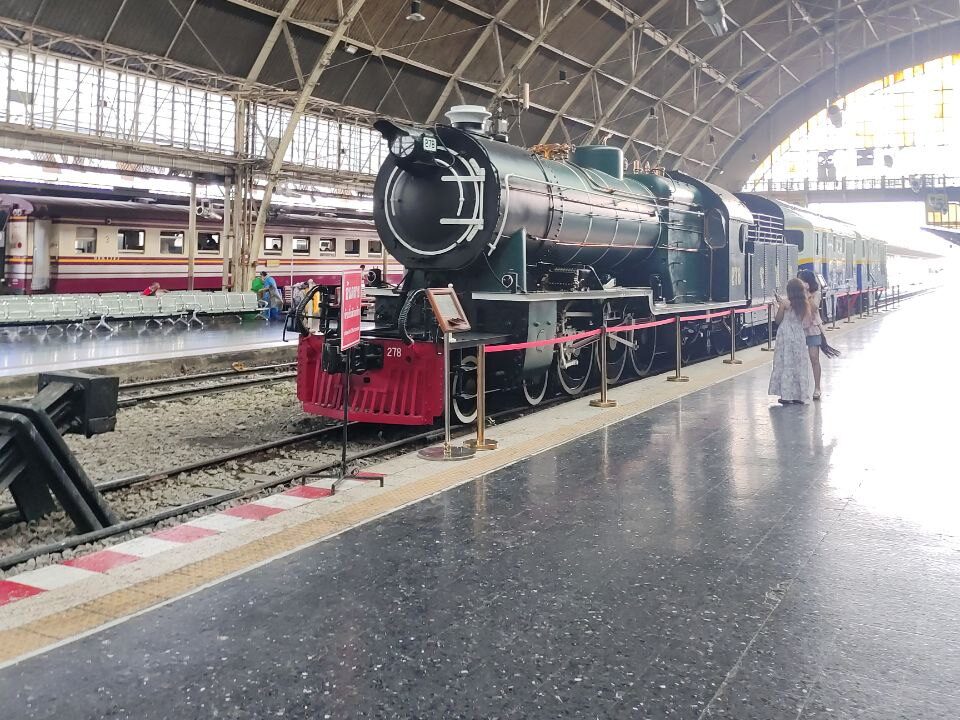
As we entered the station, we saw an old, but well maintained train. We could see only a small crowd, despite Bangkok being the country capital. At Trivandrum central station, it would have easily had 100 times the crowd during its peak hours. As the train moved, I could see why there was no crowd. The reason is that national highways are better in Thailand. But the countryside views were mesmerizing.
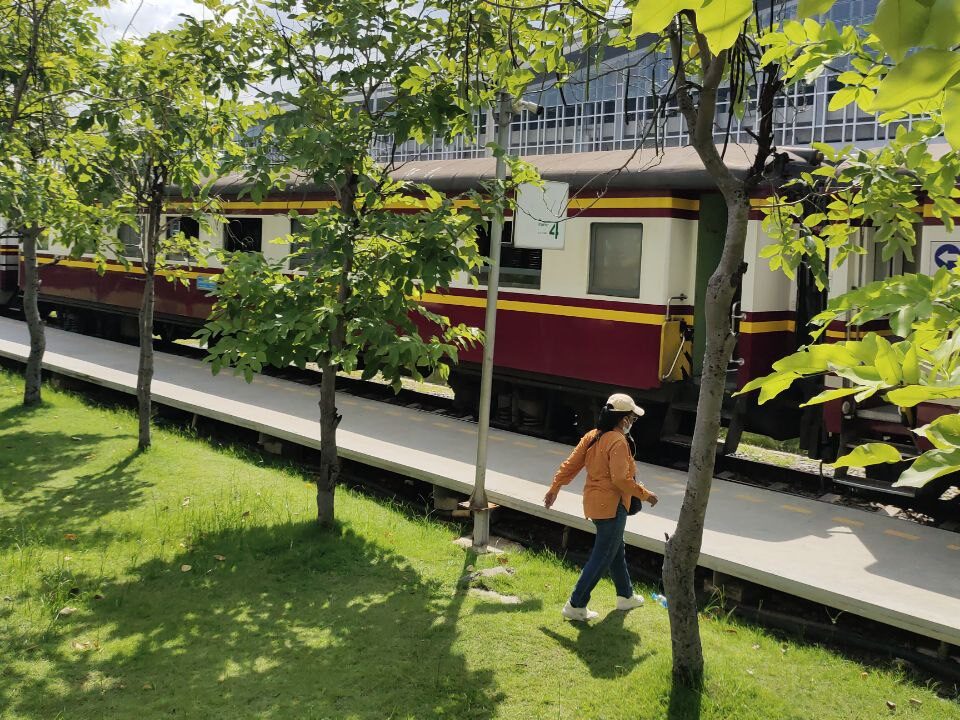
We could also see some chaotic slum areas while travelling, which is another side of Bangkok city which is not that visible. There were fruit and snack sellers inside the train itself. One old lady scammed me by selling jackfruit to me instead of Durian. Again disappoinment. After a 2 and half hour journey, we finally reached the town of Ayyuthaya.
The city of Ayyuthaya
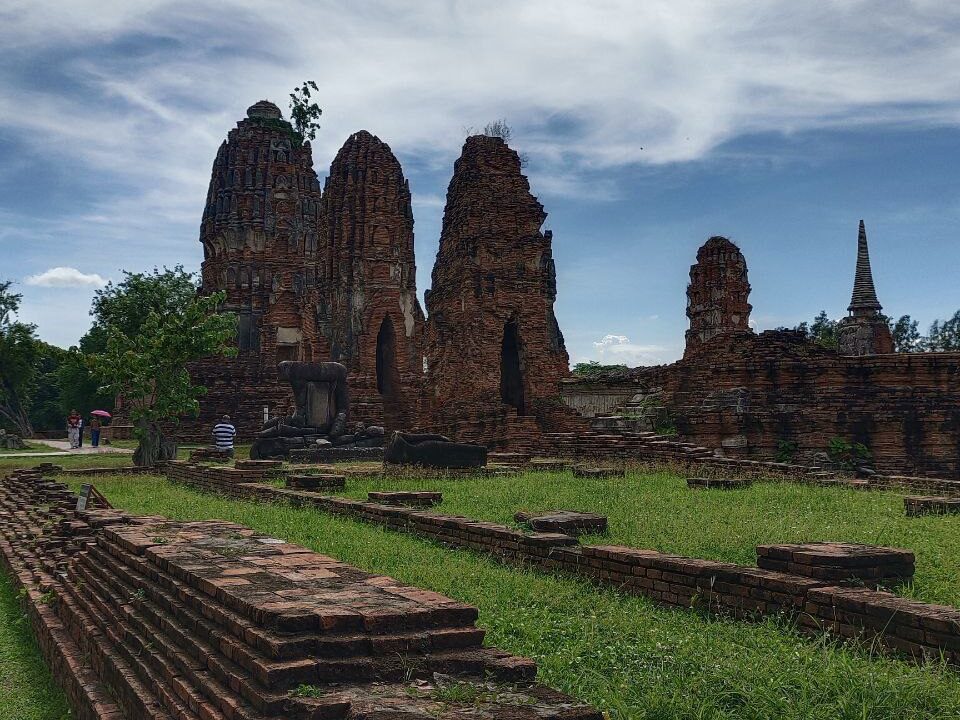
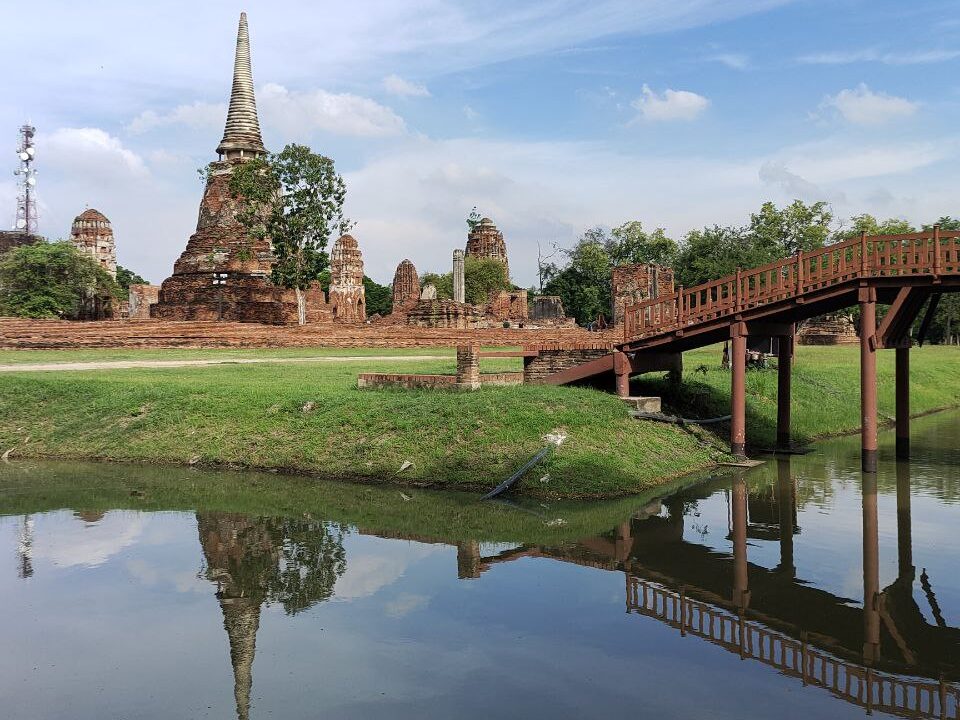
While moving through the roads, we saw well planned linear roads, with an emphasis on Prangs. The central tower of Southeast Asian temples is called prang. We were amazed to see such monumentality in this city. Coming to the historical side of Ayyuthaya, the Ayyuthaya kingdom was established in the year of 1351 CE, at the confluencing point of three rivers: theChao Phraya, the Pa Sak, and the Lop Buri. Clearly it’s an island city, strategically located by trade and security purposes.
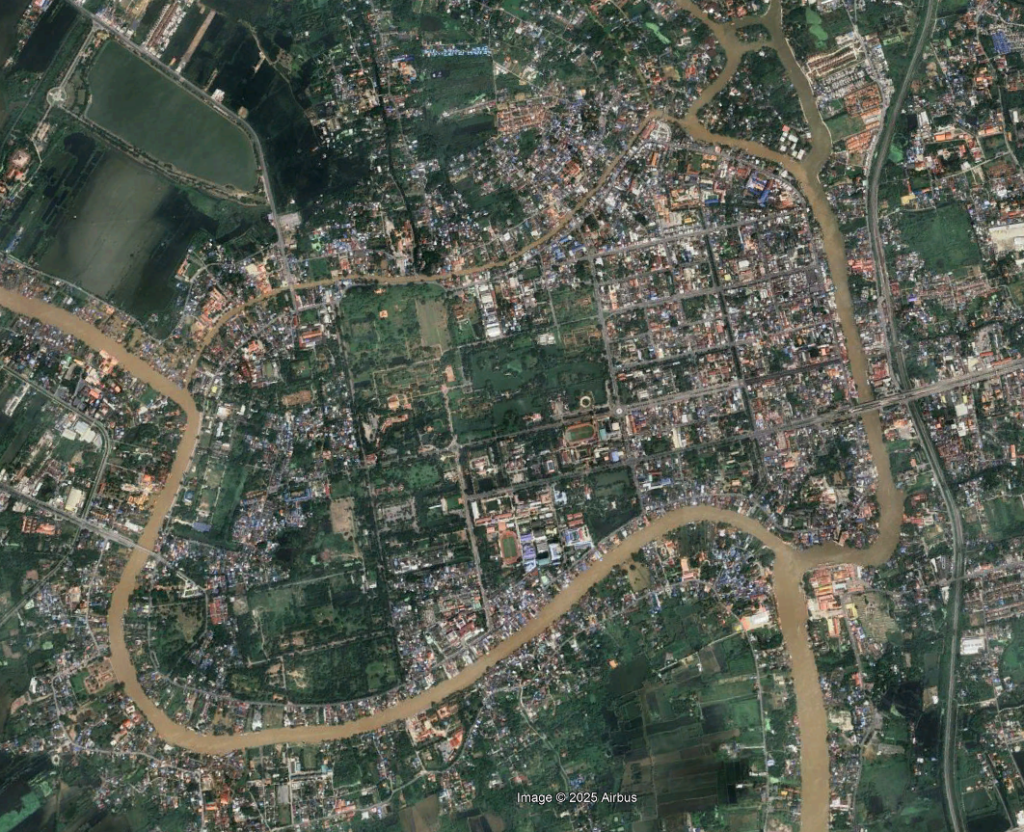
I imagined how these places should have been 700 years ago. A river where huge old merchant ships used to dock, once a busy riverine port. The place should have once had numerous warehouses. Roads which used to end at these ports. Japanese, Chinese and European merchants coming, having their conversations and negotiations with the local merchant, etc. I was not surprised, my imagination was right. There was a separate settlement itself for the Japanese, Chinese as well as the Portuguese at the outskirts of Ayyuthaya. One should also imagine that Ayyuthaya was the kingdom contemporary to the mighty Indian Kingdom Vijayanagara. Ayyuthaya established just after 15 years of establishment of Hampi. One in India,which is famous for the mighty Vijayanagara temple architecture while the other for the Buddhist temples. Both the states were famous for the diplomatic relations they used to keep with other nations. I could also see the architectural hybridization in the Ayyuthaya as well.
Hybridization in Ayyuthaya Architecture
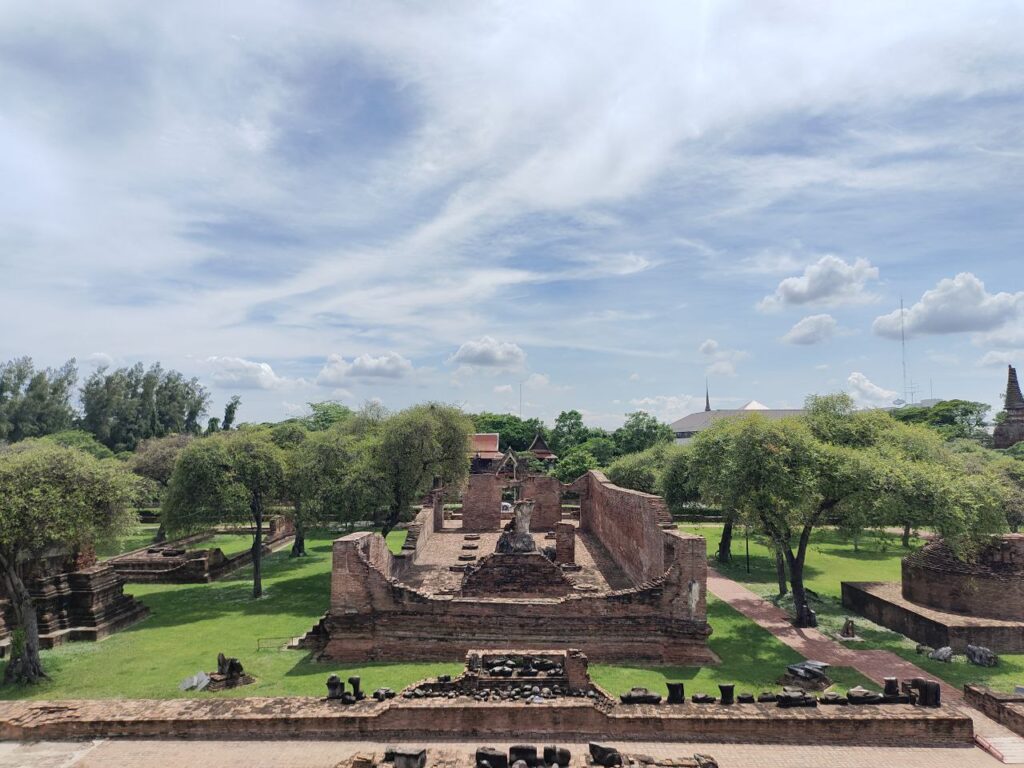
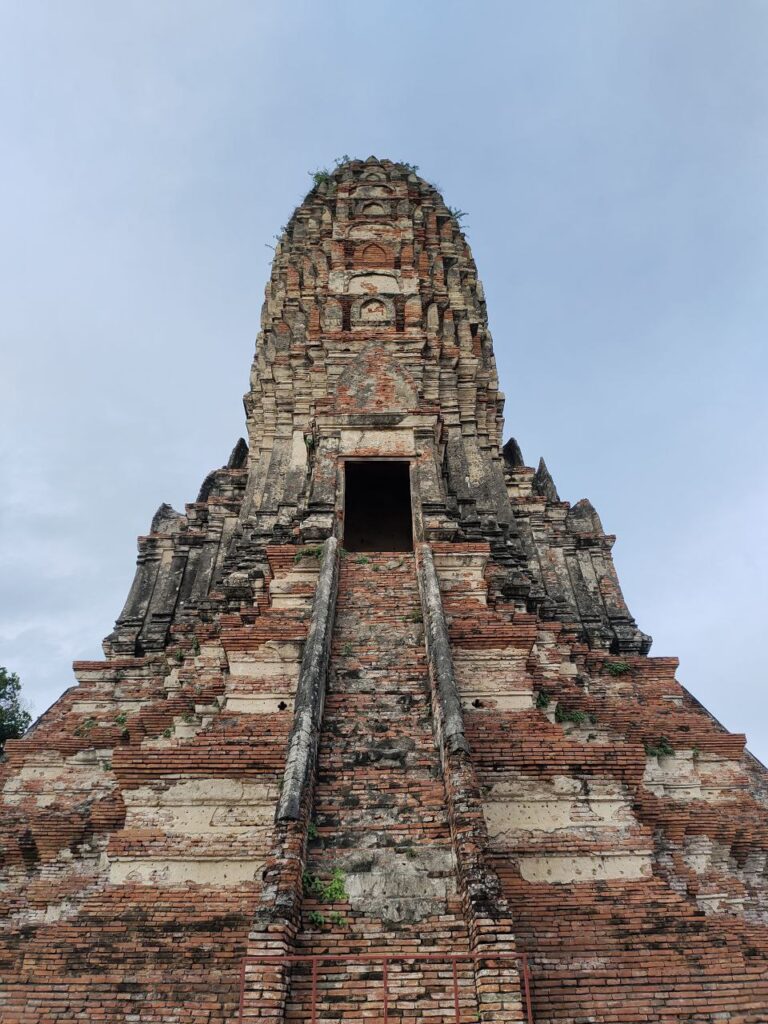
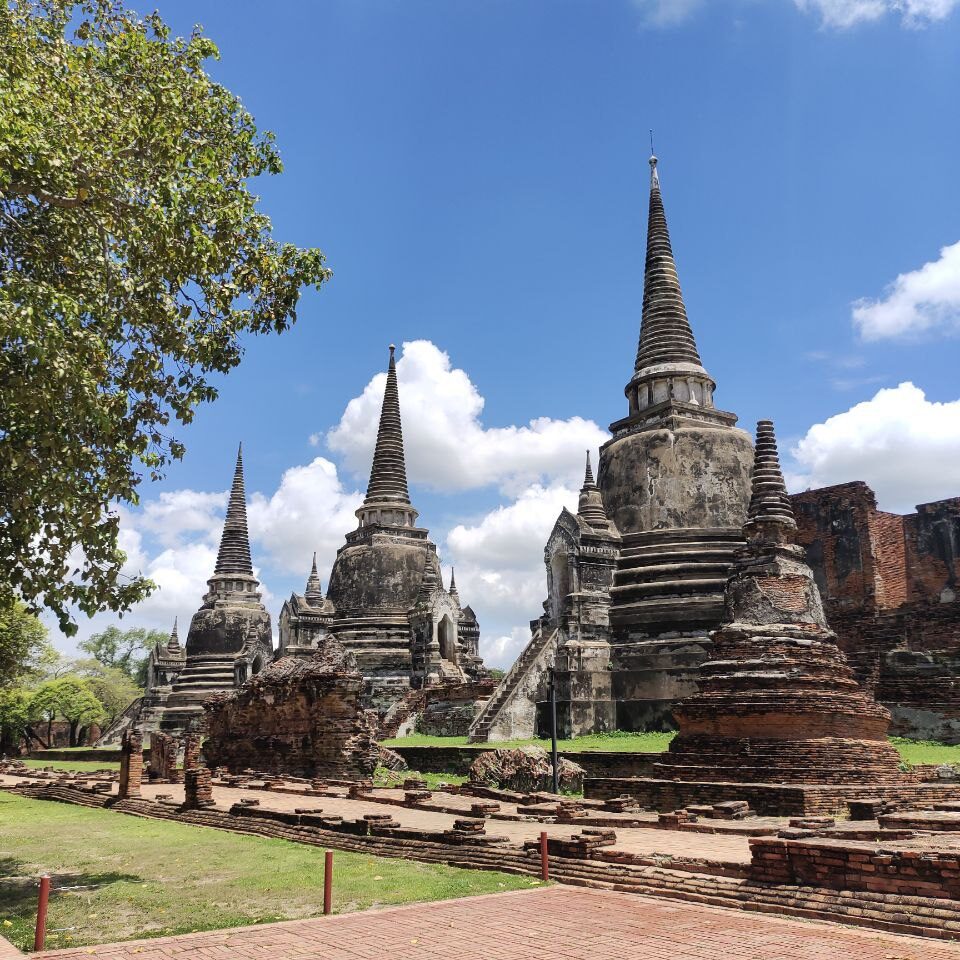
The first question was the meaning of Ayyuthaya? What is the etymology of Ayyuthaya? From a little google search, I realized that it came from Ayodhya. With that, it was clear that it was connected with Bharat. A typical temple in Ayyuthaya consists of the Central tower called Prang, subsidiary stupas called Chedi, assembly halls and surrounding galleries. We could easily identify it as a hybridized version of different architectural styles. The similarities with the Khmer architecture is the most striking one. The central prang is derived from the majestic architecture of Cambodia. But the building materials are different. In Ayyuthaya, they used brick plastered with lime as the major construction material, whereas the Khmers followed with sandstone. The availability of fertile clay soil could have been the reason for the same. Most of the plaster work has been chipped off already. The ornamentations are slightly less than Cambodian temples, the change in material could have been one of the reasons for the same.
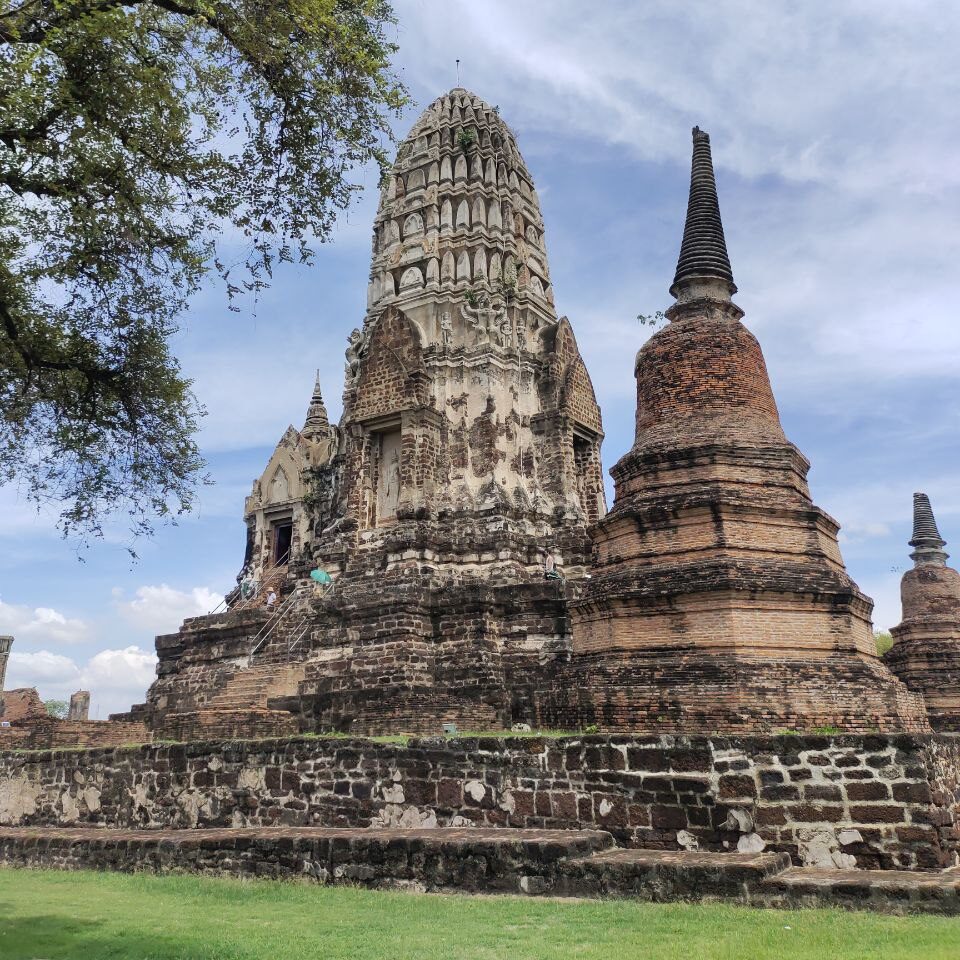
Apart from the Khmer architecture, I was curious to check the Indian influences. In terms of planning, we could easily identify a hierarchy of structures quite similar to Indian temples. While the striking structure of a hindu temple is above the Girbhagriha, where we call it Shikhara in North and Vimana in south India. In the 10th century,the Imperial Cholas tried to expand their power to Southeast Asian countries. But in the temples of Thailand, one can identify the similarities between the Shikhara and Prang. The Prang is following a latina shaped shikhara, where the structure is curvilinear. In both cultures, the mythology remaines the same, where the towering structure is related to mount Meru. But how is the structure more related with the Nagara style than the Dravidian style? I started researching. Was there any more connection between North of India and Southeast Asia?. In fact there was…!!! There is evidence of trade between the coast of Orissa and Southeast Asian countries. It could be a topic of research for another time.
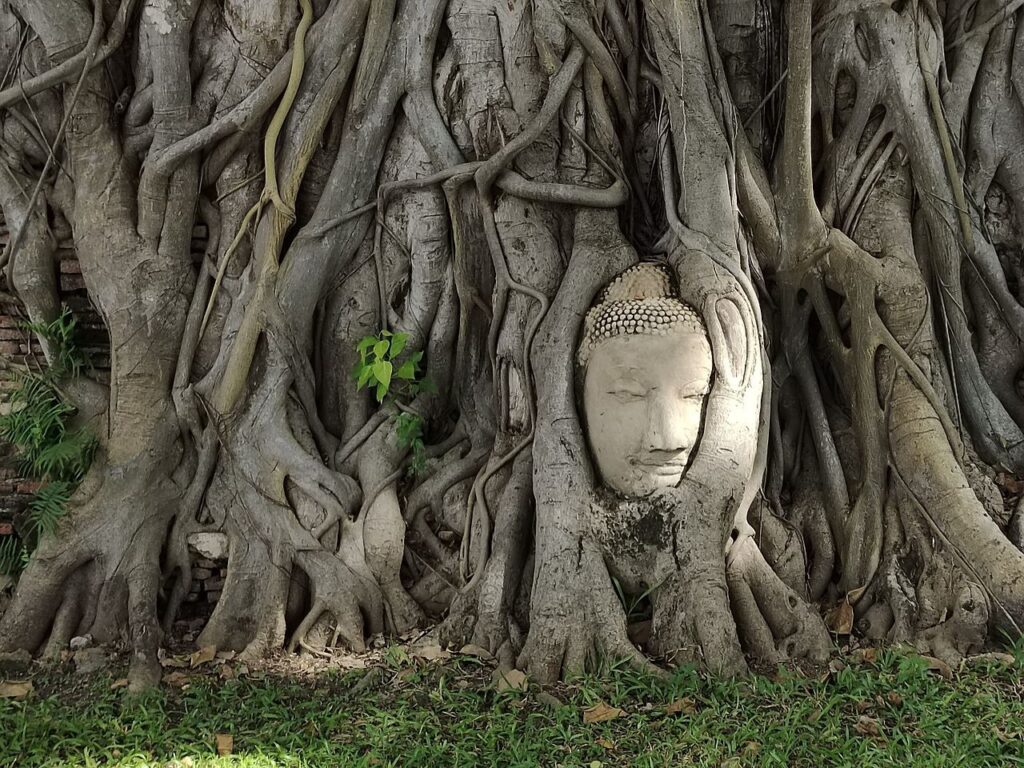
When we were checking other aspects we realized that, the entire temple complexes followed an asymmetrical balance which was also common in Indian temples. After the main entrance one could see large pillared assembly halls, which once had Ayyuthaya sloping roofs collapsed. Similar structures were visible in India, where we call them mandapa, which also acted as assembly halls. The proportions look almost similar in both. But the assembly halls are detached from the main central prang, which are not common in Indian temples. This detachment is giving another hierarchy to the central prang. The architecture of the assembly halls were quite simple with very less ornamentation. The presence of earlier stucco work is unclear.
Another striking feature is the chedis which evolved from the Anuradhapura bell shaped Stupas. The amalgamation happened due to the frequent cultural exchanges between South Asia and Southeast Asia. The spread of Theravada Buddhism from India played a major role in this architectural mixing. Also a set of monks who migrated from Eastern India to the Myanmar region also helped in reshaping the stupa architecture of South East Asia.
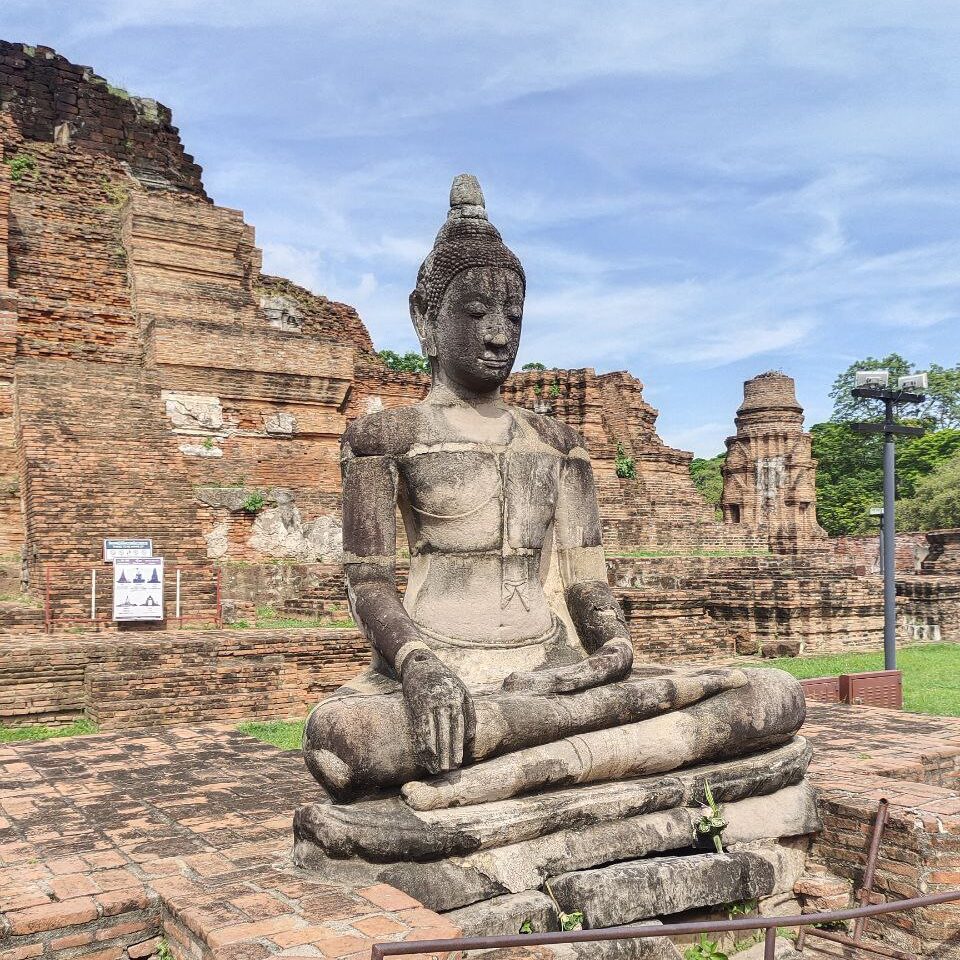
The Wat Phra Si Sanphet, a temple in the central part of Ayyuthaya, follows another layout, with multiple chedis arranged in a sequential way. All these chedis were commissioned by various kings during different time periods. The scale of the chedis were varied in this particular temple. Most of it was destroyed in a raid by the Burmese army in the 18th century.
The final day
After exploring the three days in the town of Ayyuthaya, we visited several temples. As a heritage enthusiast, I was able to clearly see the vast urban setting that once prevailed in Ayyuthaya. A city with vertical prangs as skyscrapers, a well established canal system reaching every corner of the town, small boats from the city centers and markets moving to the port, the gigantic Japanese and Portuguese vessels waiting at the port of Ayyuthaya for these boats, the men who were busy loading and unloading in the port area. Streets filled with monks and intellectuals, the royal Kings and queens visiting the temples from the central Royal palace, the processions for the royal people with Royal elephants, palenques and red carpets. Yes there was a lot more left for imagination.
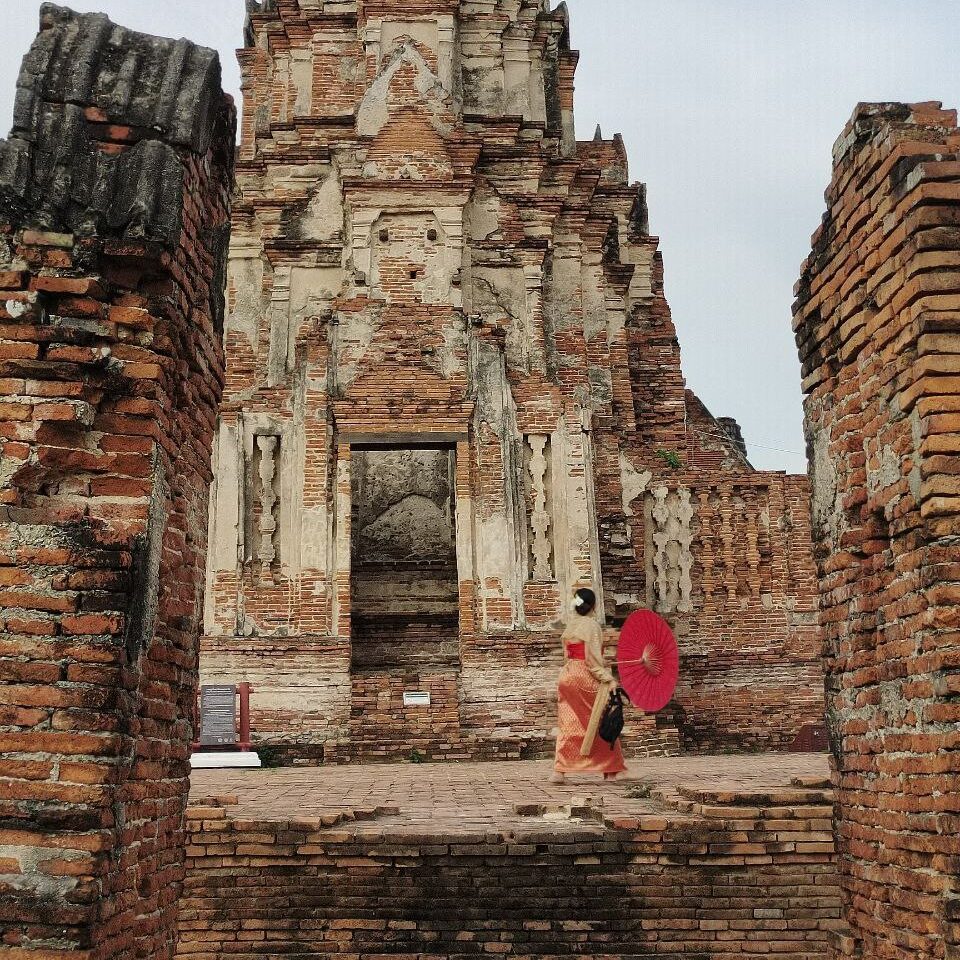
We stopped our journey by visiting the temple of Wat Chaiwatthanaram, which gave us another glimpse of the architectural scale that was prevalent in Ayyuthaya. A scale which can be related to the Khmer temples of Cambodia. A kingdom that competed with the mighty Khmers, a kingdom that aspired to have the best and monumental architecture.
With a lot of memories and stories to tell, without any regret of not visiting Cambodia, we moved to our next destination. Pattaya….!
Discover more from HERITAGE VEDANTA
Subscribe to get the latest posts sent to your email.
